Track 1: Biochar for Agriculture and Arable Land
How It Works: Three Parallel Pathways
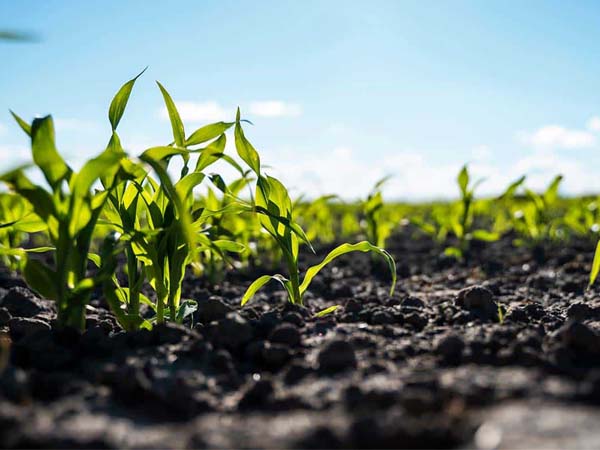
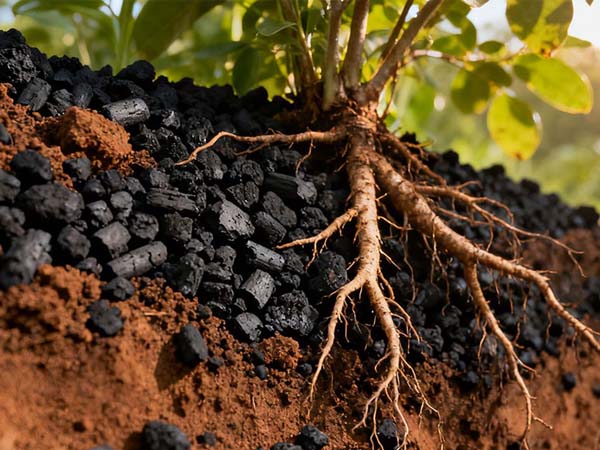
Biochar acts in soil through three pathways: physical, chemical, and biological. Only by understanding all three can we judge whether benefits will materialize for a given combination of biochar, soil, and crop.1. Physical Pathway: Restructuring Soil and Retaining Water
Biochar is porous and far less dense than soil minerals. Once applied, it directly lowers soil bulk density, raises total porosity, and improves aeration and infiltration. Its pores hold water, increasing the soil's water-holding capacity and providing a buffer during drought or fluctuating moisture. More importantly, there is an aggregation effect: biochar particles act as nuclei around which aggregates form, binding with clay particles, iron and aluminum oxides, and organic matter. This raises the share of macroaggregates and lowers the share of clay. In an incubation study on an Alfisol, the control treatment without biochar showed aggregate breakdown under wet–dry cycles, with the residual clay fraction increasing by up to about 27.5%. Adding biochar, by contrast, significantly increased macroaggregates and reduced clay content, partly offsetting the way moisture fluctuations accelerate organic carbon decomposition.
Notably, aggregates play two seemingly contradictory roles: they protect organic carbon through a physical barrier while also improving the root environment through structural stability. This dual role explains why biochar works best on structurally degraded soils and offers limited gains where soil structure is already sound.
2. Chemical Pathway: Boosting CEC, Buffering pH, and Complexing Nutrients
Biochar surfaces are rich in oxygen-containing functional groups such as carboxyl and phenolic hydroxyl groups, giving them a high cation exchange capacity (CEC). They adsorb and slowly release nutrient ions such as K⁺, Ca²⁺, Mg²⁺, and NH₄⁺, reducing leaching. The minerals carried in its ash can also replenish nutrients directly. In acidic soils, the alkaline ash buffers pH, easing the way acidification suppresses roots and microorganisms.
One often-overlooked reverse effect is that the aging process raises CEC while lowering anion exchange capacity (AEC). Over time, biochar therefore retains cationic nutrients such as ammonium more strongly, but holds anionic nutrients such as nitrate and phosphate less effectively. When long-term field use shows that nitrate leaching has not improved, this is usually the reason.
3. Biological Pathway: Giving Microorganisms a Home
The porous structure of biochar gives microorganisms a physical habitat, reducing predation, buffering environmental stress, and extending microbial lifespan. Its chemically heterogeneous surface also creates a variety of microhabitats, sustaining microbial diversity and functional differentiation. Quantitatively, biochar addition raises microbial biomass carbon (MBC) by 21.7%, microbial necromass carbon (MNC) by 19.7%, and the total capacity of the microbial carbon pump (MCP) by 10%–59%. It also increases soil aggregates by 16.4%, strengthening the mineral carbon pump, which contributes about 29% of persistent organic carbon.
Long-term observations also show that biochar drives microbial communities to shift from r-strategists (copiotrophic, fast-growing) to K-strategists (oligotrophic, resource-conserving), raising carbon use efficiency so that more carbon goes into biosynthesis rather than being lost through respiration. In addition, biochar promotes fungi, especially arbuscular mycorrhizal and ectomycorrhizal fungi. Fungi themselves have a higher CUE, and their necromass contains chitin, with cell walls that are harder to decompose, making them major contributors to soil organic carbon stabilization. This suggests the fungal pathway may be the key route by which biochar enhances the MCP.
The physical, chemical, and biological pathways operate in parallel, and all are governed by the soil's baseline conditions.
| Physical Pathway | Chemical Pathway | Biological Pathway |
| Lower bulk density, raise total porosity | Raise CEC, adsorb nutrient ions | Provide a physical habitat for microorganisms |
| Improve water-holding and infiltration | Alkaline ash buffers soil pH | Community shifts from r- to K-strategists |
| Promote macroaggregate formation | Functional groups complex nutrients, reduce leaching | Promote mycorrhizal fungi |
| Reduce clay fraction | Ash carries mineral nutrients | Raise carbon use efficiency (CUE) |
|
Key data: Clay up to +27.5% under wet–dry cycles; aggregates +16.4% (meta); Greatest benefits on structurally degraded soils. |
Key data: Root-zone soil C:N ratio +13.5%–16.8%; AEC declines after aging, leading to poorer nitrate retention; Must be coordinated with nitrogen management. |
Key data: MBC +21.7%, MNC +19.7%; total MCP capacity +10%–59%; The fungal pathway is key to carbon stabilization. |
Performance Data: From Yield Gains to Reduced Fertilizer Use
The value of biochar-based fertilizers now goes beyond simply raising yields. In a tobacco field demonstration in Luoning (Henan Province, China), applying 900–1,200 kg of biochar-based fertilizer per hectare cut chemical fertilizer use by 20%–30% while markedly optimizing the microbial community around the tobacco roots, raising the root-zone soil carbon-to-nitrogen ratio by 13.5%–16.8%, and improving leaf quality at the same time. This combination of reduced inputs and improved performance is more compelling for commercial adoption than yield figures alone, because it directly affects farmers' input costs.Similar demonstrations have expanded from tobacco to medicinal herbs such as skullcap and licorice, and to cash crops such as the Jinzhu sand pear. They have delivered results in improving soil physical and chemical properties, optimizing root-zone microbial communities, promoting the uptake of mineral nutrients, and raising the intrinsic quality of produce.
The table below summarizes field yield gains from biochar-based fertilizers across different crops, along with global meta-analysis averages for yield and aboveground biomass, as a reference for agricultural performance. The yield figures come from independent trials on different crops and soils and cannot be compared directly. The meta-analysis figures are global averages, and effects depend heavily on baseline soil fertility and moisture.
| Group | Crop / Metric | Yield Gain vs. Control |
| Field Measurement | Soybean specialty fertilizer | +7.20% |
| Field Measurement | Corn specialty fertilizer | +7.6% ~ 11.6% |
| Field Measurement | Potato specialty fertilizer | +16.90% |
| Field Measurement | Biochar-based fertilizer on rice | +16.98% |
| Global Meta-Analysis | Mean yield | +19% |
| Global Meta-Analysis | Aboveground biomass (shoots) | +30% |
Biochar's field performance depends heavily on how it is applied, and this is where field and laboratory results diverge most. The table below summarizes the standard application parameters, recommended practices, and the associated reasons and risks for biochar in agricultural soils.
| Parameter | Standard Practice | Reasons and Risks |
| Rate | Typical international rates 1–10 t/ha; 0.5–3 t/ha per season for large areas, applied once a year or every two years | Remediation projects may exceed this range in phases; a single high dose risks saturating carbon–mineral binding sites |
| Method | Light tillage into the top 10–15 cm | Too shallow and it is washed away by rain; too deep and it barely joins root–microbial processes |
| Co-application | Almost always blended with manure, compost, or mineral fertilizers | Biochar has a high C:N ratio; applied alone it may initially immobilize soil nitrogen, causing short-term nitrogen deficiency |
| Particle size | Powder aids dispersion; granules ease handling and reduce dust | Particle size affects water-holding and water-supply capacity, the degree of surface exposure, and transport and application costs |
| Pyrolysis temperature | For carbon storage, 400°C or 600–700°C; for fertility, lower temperatures | High-temperature biochar is more stable but less microbially available, a trade-off |
2. An Easy-to-Miss Fork in the Road: Initial Nitrogen Levels
The carbon and nitrogen cycles are tightly coupled, and the C:N stoichiometric ratio constrains microbial growth. A meta-analysis covering 932 paired observations worldwide reveals the high heterogeneity of biochar's effects. In low-nitrogen soils, biochar raised MBC by 37.4%, MNC by 14.0%, and SOC by 47.9%; in high-nitrogen soils, the corresponding gains were only 22.7%, 6.15%, and 29.4%.
The mechanisms behind the two differ. Low-nitrogen soils are dominated by microbial–mineral association, where MBC responds mainly to initial SOC and soil depth. High-nitrogen soils are dominated by physical protection, where MBC accumulation is optimized at higher application rates, in warmer climates, and at lower initial SOC/TN ratios. MNC, meanwhile, responds more strongly to longer study periods, higher total biochar carbon content, and alkaline soils.
This means there is no one-size-fits-all application plan. In high-nitrogen soils, such as farmland with a long history of nitrogen inputs, longer periods or higher total carbon content are needed to trigger an MNC response. In low-nitrogen soils, such as degraded or impoverished land, the effects are more sensitive to application rate, initial SOC, and soil depth.
3. Product Forms and Formulations
End products have evolved from pure biochar into several categories, and formulation determines whether a product can perform reliably on a given crop:
Specialized biochar compound fertilizers: N-P-K ratios are tailored to crop nutrient needs, with biochar serving as both carrier and slow-release agent. This is currently the dominant form.
Biochar-based organic fertilizers: biochar combined with decomposed organic matter, focused on improving soil structure and raising organic matter content.
Biochar-based microbial inoculants: biochar acts as a carrier for functional microbes, using its pores to provide a survival microenvironment that extends shelf life and improves colonization.
Nano liquid biochar fertilizer: a micro- and nano-scale biochar suspension for foliar spraying or fertigation, improving biochar's dispersion and contact efficiency.
Looking at the global product mix, blended biochar-based fertilizers have risen to about 41%, while pure soil amendments account for about 33%. Application is most concentrated in high-value cash-crop settings such as orchards and tea plantations, at about 35%.
Economics: The Cost Structure Sets the Pace of Adoption
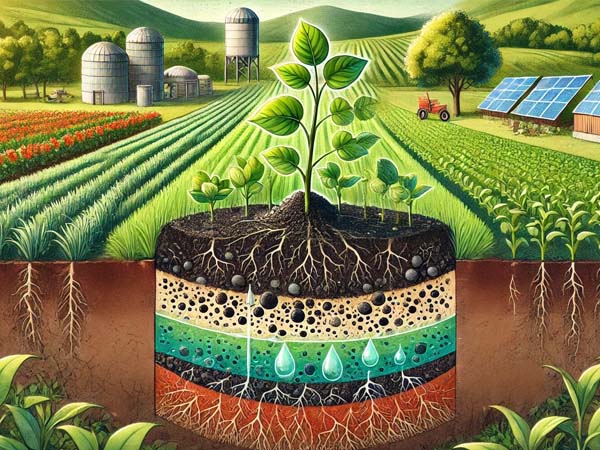
The cost gap remains the biggest barrier: farmers are accustomed to low-cost inputs and are reluctant to spend more in the short term. As a result, demonstrations generally perform well while large-scale rollout stays slow. Stable use is currently concentrated on high-value crops such as flue-cured tobacco, tea, and citrus, while adoption for field crops like vegetables and grains remains limited. There are two ways forward: lowering costs through co-production and economies of scale, and opening a second revenue stream through carbon returns.
Biochar Production Cost Structure
| Cost Item | Order of Magnitude | Notes |
| Raw materials (straw, etc.) | CNY 400–500 / tonne | Includes collection, transport, and drying costs; varies widely by region |
| Core intelligent equipment | Several million CNY | Mainly continuous carbonization equipment; the project's main fixed investment |
| Total production cost | About CNY 2,000 / tonne | Includes environmental, labor, and energy costs |
| Alternative revenue (waste heat) | — | Under co-production, steam / power can significantly offset costs |
| Carbon returns | — | International biochar carbon prices can reach about USD 180 / tonne |
Model 1: Regional Collection and Storage
Nanjing Danfeng uses continuous straw carbonization technology to build a complete chain from field collection and storage to product development and market conversion. In 2025 it collected and stored more than 100,000 tonnes of straw, with biochar products sold as far as Hainan, Chongqing, and Xinjiang, generating annual output of CNY 30 million. It also took the lead in signing a USD 200,000 biochar carbon credit order. The key to this model is a stable raw-material collection network, which is also the part of the biochar industry most prone to losing control.
Model 2: Biochar–Steam–Fertilizer–Power Co-Production
Huangshan Junong's 150,000-tonne-per-year project required total investment of CNY 160 million and covers 80 mu (about 5.3 hectares). It uses biochar–steam–fertilizer–power co-production: the front end produces 25,000 tonnes of high-quality biochar annually for deep processing, while the back end yields 350,000 tonnes of waste-heat steam each year to supply heating and power to nearby industrial parks. The model uses energy revenue to offset material costs while solving the environmental problem of bamboo and straw being burned or dumped.
Model 3: Distributed Small-Scale Stations
Sinovo Carbon plans to build more than 30 distributed production stations across China over the next three years, driven by the twin engines of products and equipment. Continuous pyrolysis carbonization technology can now integrate a carbonization plant into a mobile shipping container, combining high throughput with stable quality. By siting equipment close to where raw materials are produced, collection and logistics costs can be reduced.
Model 4: Integrated Low-Carbon Factories
Shike built an integrated low-carbon circular production line in Shanghai covering pretreatment, low-temperature carbonization, high-efficiency fermentation, and high-value granulation. It has cumulatively recycled nearly 119,000 tonnes of organic waste such as straw, garden trimmings, and mushroom residue, converting it into about 40,700 tonnes of biochar and functional fertilizers, with product output of about CNY 70.2 million, and has fertilized and improved soil across 125,000 mu-times.
Boundary Conditions
Agriculture is where the gap between promising trials and disappointing field results most often appears, and it usually stems from four situations.(1) High baseline soil fertility: biochar's promotion is marked in nutrient-poor soils but negligible, or even inhibitory, in fertile soils.
(2) No accompanying nitrogen: initial nitrogen immobilization can suppress germination or early growth.
(3) Poor application method: surface spreading without incorporation, oversized particles, or application after the rainy season all significantly reduce results.
(4) The return gap between cash and field crops: the same yield gain can cover costs on high-value crops but not on staple crops.
In judging whether a biochar agriculture project is viable, these four boundary conditions matter more than any single yield figure.
Appendix: Abbreviations and Glossary
CEC: Cation Exchange Capacity
AEC: Anion Exchange Capacity
MBC: Microbial Biomass Carbon
MNC: Microbial Necromass Carbon
MCP: Microbial Carbon Pump
CUE: Carbon Use Efficiency
SOC: Soil Organic Carbon
TN: Total Nitrogen
C:N: Carbon-to-Nitrogen Ratio