BioCoal Drives Decarbonization in Aluminum Plants
Unlike coal, a fossil fuel formed over millions of years that releases locked ancient carbon when burned, torrefied biomass originates from renewable organic raw materials (agricultural residues, wood waste, palm biomass, energy crops and other lignocellulosic feedstocks). Biomass is continuously regrown in a short natural cycle, making it a circular, renewable carbon resource.
Taking torrefied banagrass pellets as an example, as a type of energy crop, it is a densified biomass fuel featuring high calorific value, low ash content and low sulfur content.
It has a low heating value of approximately 4,730 kcal/kg, with a sulfur content of 0.11%, ash content of 4.51% and moisture content of 2.05%, far outperforming conventional raw coal.
With sulfur content below 0.11%, it reduces SO₂ emissions by over 90%, bringing nearly no risk of acid rain.
Its NOₓ emissions are 30–80% lower than those of coal. Dust emissions can steadily meet emission standards below 80 mg/m³ with simple dust removal treatment.
The ash residue output is only one-tenth that of coal. Rich in potassium, the ash can be recycled as organic fertilizer, achieving near-zero solid waste discharge.
Torrefaction endows the fuel with high energy density and a high volatile matter content of 71.5%. It is easy to ignite and enables complete combustion, with a thermal efficiency ranging from 85% to 92%.
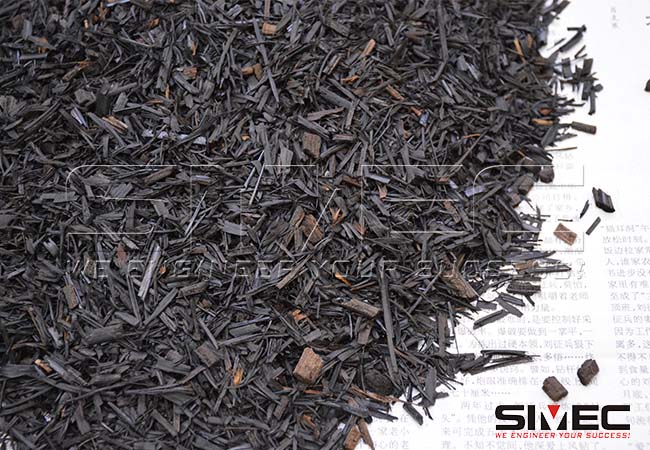
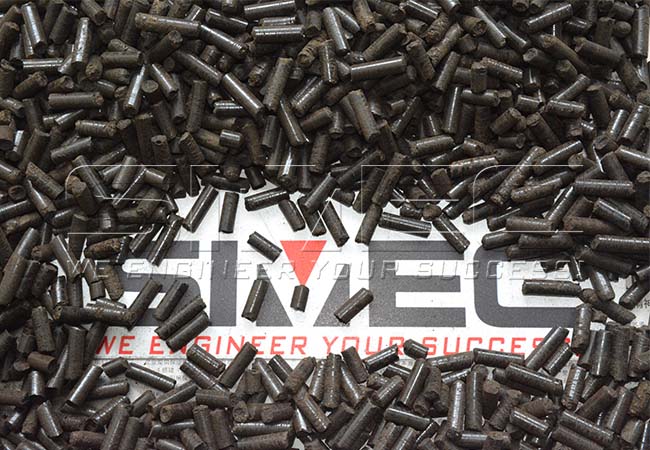
Decarbonization Mechanism of Torrefied Biomass Pellets:
① Carbon Cycle Balance
When raw biomass plants grow, they absorb atmospheric CO2 via photosynthesis and fix carbon in organic tissues. When torrefied biomass pellets are combusted, they release only the carbon that was recently captured from the air. This forms a closed short carbon cycle: the emitted CO2 will be re-absorbed by new vegetation regrowth.
In contrast: Burning coal releases geological fossil carbon that has long been isolated from the atmosphere, adding new incremental carbon to the global carbon cycle and driving direct greenhouse gas accumulation.
② Carbon Emission Offset & Fossil Fuel Substitution
Black pellets directly replace bituminous coal, anthracite and other fossil fuels used in:
Industrial boilers for steam and heat supply in aluminum refineries;
Carbon supplement and heating in recycled aluminum melting & casting;
Auxiliary fuel for electrolytic aluminum anode production.
Every ton of coal displaced by torrefied biomass cuts direct fossil carbon emissions of the plant.
③ Carbon Removal via Torrefaction Process
Torrefaction is a mild thermal treatment under oxygen-limited conditions:
It removes moisture, volatile matter and low-carbon organic components from raw biomass. It increases fixed carbon content and energy density, turning loose biomass into high-calorie, coal-equivalent solid fuel. This process locks stable biocarbon and reduces methane and other volatile greenhouse gas emissions from raw biomass natural decomposition, realizing extra carbon reduction at the source.
④ Low Lifecycle Carbon Footprint
The full lifecycle carbon output of torrefied black pellets (cultivation, collection, torrefaction processing, transportation and combustion) is far lower than that of fossil coal. For aluminum enterprises facing CBAM, carbon quotas and carbon neutrality targets, it delivers verifiable, accounting-eligible biogenic carbon reduction.
Generally speaking, torrefied biomass pellets achieve decarbonization mainly through a sustainable biological carbon cycle. Biomass absorbs atmospheric carbon during growth, and its combustion only recycles recently sequestered CO2 instead of releasing fossil carbon. By fully or partially replacing coal in aluminum refinery boilers and smelting processes, it eliminates massive fossil greenhouse gas emissions. The torrefaction upgrading further optimizes carbon stability and reduces upstream carbon leakage, making it a technically mature and cost-viable decarbonization pathway for the aluminum industry.