Biochar Carbon Removal Pathway Insights
What is biochar carbon removal?
Biochar is a black, porous solid produced by the high-temperature pyrolysis of agricultural or forestry waste (such as straw and sawdust) under anaerobic conditions. This process transforms organic carbon, which would otherwise be released back as CO₂ through decay or incineration, into a highly stable carbon structure. Scientific research shows that the carbon in biochar can be stably stored in soil for hundreds to thousands of years (IPCC, 2019), thereby achieving long-term sequestration.
According to a 2023 meta-assessment published in "Nature Communications", biochar technology could theoretically remove 200-400 million tons of CO2 equivalent annually if global biomass waste is utilized rationally, without competing with food production for land resources.
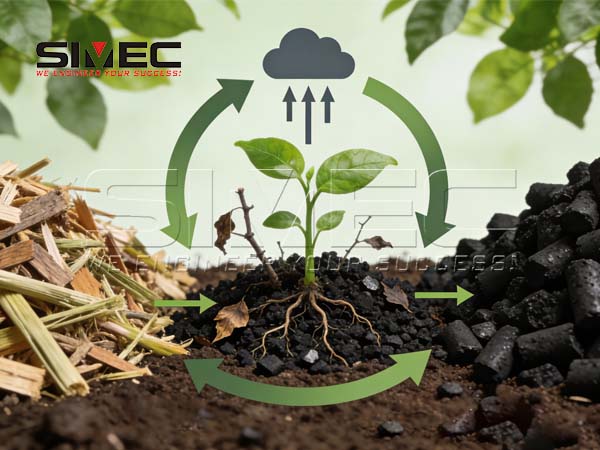
The key question is: does it truly add to carbon sequestration? If the raw materials would have been incinerated or naturally decomposed, then converting them into biochar constitutes "additional" carbon removal; conversely, if trees are specifically cut down for biochar production, it may result in a net increase in carbon emissions. Furthermore, biochar must be applied for long-term uses such as soil or building materials, rather than being burned as fuel; otherwise, carbon sequestration is not truly achieved.
Therefore, internationally, stringent certification standards have been developed, requiring projects to provide:
- Proof of raw material origin;
- Carbon conversion efficiency data for the pyrolysis process;
- Stability analysis by third-party testing;
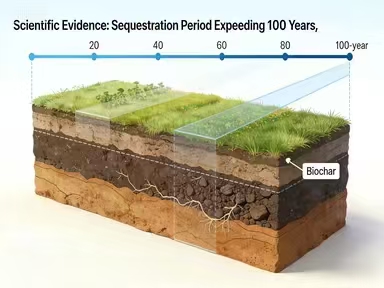
- Scientific evidence of a sequestration period exceeding 100 years.
Policy follow-up is underway.
The EU launched a pilot program for the Carbon Removal Certification Framework (CRCF) in 2024, aimed at standardizing carbon removal credit verification, explicitly recognizing compliant biochar as a qualified carbon removal method.
While the US has not yet directly subsidized biochar, the emphasis on "persistent carbon sequestration" in its Inflation Reduction Act has laid the groundwork for future policy support and created a favorable policy environment.
In China, the Ministry of Ecology and Environment's 2023 draft "Methodology for Voluntary Greenhouse Gas Emission Reduction Projects" marked a significant milestone by listing "biochar carbon sequestration" as a potential methodology for National Certified Emission Reductions (CCERs).
Biochar is not a silver bullet for climate change, but it is a carbon removal solution ready for immediate scale-up. To truly contribute to carbon neutrality, the priority must be placed on establishing a science-based, transparent, and verifiable standards system. Ultimately, only verifiable removal qualifies as true removal.